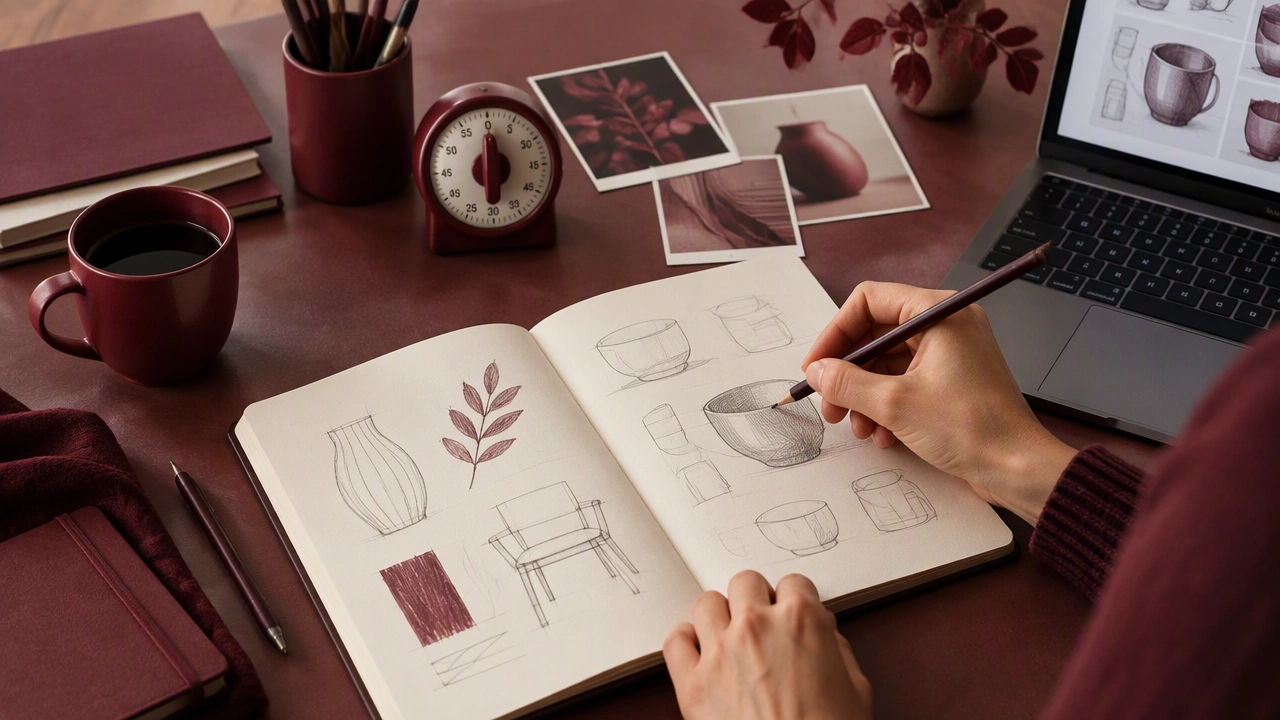
How to build a daily sketching habit for designers: simple prompts and time-boxed exercises
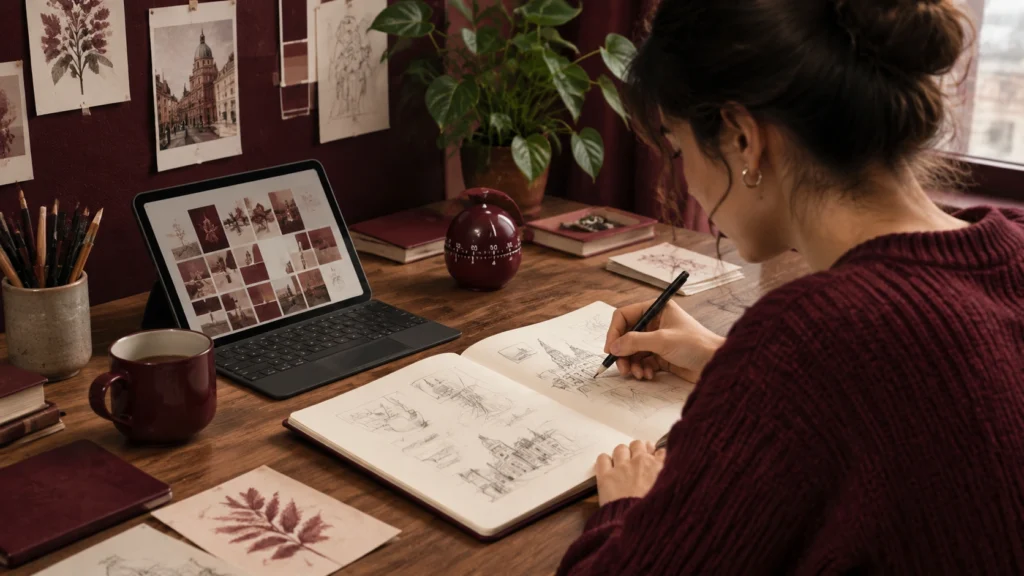
A steady sketching practice is one of the most reliable ways to grow creative skills and keep your design practice fluid. It trains observation, strengthens visual memory, and builds confidence in making quick decisions. If you have been wondering how to build a daily sketching habit for designers, the key is consistency over intensity. Short, repeatable sessions beat occasional marathons, especially when your calendar is full.
The goal is not to produce polished work each day. The goal is to keep your hand, eye, and brain in conversation. When you sketch regularly, you notice more, you carry ideas more easily, and you recover from creative blocks faster. Below is a simple system you can start today, whether you draw on paper or on screen.
Start with a tiny commitment
Begin with a ten-minute daily window. Ten minutes is long enough to warm up and make a small observation, yet short enough to fit into a busy day. Choose a consistent trigger, such as right after coffee, before opening email, or just before lunch. Attach the habit to something you already do, and keep your tools in the same place so starting feels effortless.
If ten minutes feels heavy, start with five. If it feels too easy, move to fifteen, but do not exceed twenty minutes for your first few weeks. The point is to make the routine feel automatic and light.
Use simple, repeatable prompts
Open-ended prompts create decision fatigue. Simple prompts lower the barrier and get you drawing faster. Try a small set you can reuse, such as:
- Everyday objects mug, keys, headphones, plant leaf, shoe, glasses.
- Shapes to forms turn circles, squares, or triangles into quick 3D objects.
- Thumbnail stories three to five tiny frames that show a simple sequence.
- Color studies pick two colors and make three small compositions.
- Texture hunt draw three surfaces from life, like wood grain, fabric, or stone.
- Letterforms sketch one word in three different styles.
Rotate prompts across the week so you cover observation, structure, composition, and color. Keep them visible on a card or note so you never waste time deciding what to draw.
Time-box your sessions for momentum
Time-boxing removes perfectionism and builds momentum. Use short blocks and clear limits:
- Warm-up two minutes of loose lines, ellipses, and simple marks.
- Core sketch six to eight minutes on the chosen prompt.
- Capture takeaway two minutes to write one sentence about what you noticed.
If you have a little more time, add a second block. Try one five-minute study and one five-minute composition. If you are on a screen, set a visible timer so you feel the boundary. The limit helps you stay playful and move forward.
Build a weekly rhythm
A simple weekly plan keeps variety without adding complexity. Example rhythm:
- Monday observation from life, one object, multiple angles.
- Tuesday shapes to forms, turn basic geometry into products or icons.
- Wednesday thumbnail story, five frames, simple narrative.
- Thursday texture and pattern, close-up studies.
- Friday color study, two-color compositions.
- Saturday type study, one word, three styles.
- Sunday reflection and light clean-up of the week.
Adjust the order as needed. The value is in the pattern, not in the exact topics. A predictable structure lowers friction and makes it easier to start each day.
Paper or screen: choose what helps you start
Paper is immediate. A small sketchbook and a pencil remove setup time and keep things tactile. On paper, use a single page per day and avoid erasing too much. The point is to record ideas and observations, not to make perfect drawings.
On screen, keep a minimal setup. A single canvas, a basic brush, and a timer are enough. Turn off notifications, and avoid opening other apps. If you use layers, keep them simple. The tool should stay invisible so the habit stays easy.
Make it visible and social
Keep your sketchbook or tablet where you can see it. Place it on your desk, next to your notebook, or on top of your bag. Visibility is a quiet cue that reminds you to start. If you want gentle accountability, share one sketch per week with a colleague or a small group. The goal is not praise, it is presence. When people know you are practicing, you are more likely to show up.
Track progress without pressure
Use a simple habit tracker. A calendar with a small mark for each day you sketch is enough. Do not aim for a perfect streak. If you miss a day, start again the next day without drama. The habit grows from steady returns, not from guilt.
Every two weeks, spend ten minutes reviewing your pages. Notice what felt easy, what felt hard, and which prompts you enjoyed. Keep the ones that help you learn. Drop the ones that feel like a chore. A small, personal feedback loop is better than any complicated system.
Use constraints to spark ideas
Constraints keep practice fresh. Try a few gentle limits:
- One color plus black and white.
- One pen, no pencil, no eraser.
- Only straight lines for a day.
- Only curves for a day.
- Three compositions in five minutes.
These limits reduce overthinking and help you focus on the essentials of shape, value, and composition. They also make the sessions feel like small games, which makes the habit more enjoyable.
Turn sketches into small design outputs
To keep the practice connected to your work, end each week with a small conversion task. Pick one sketch and turn it into a simple deliverable. Examples include a rough icon, a color palette, a tiny layout, or a short pattern tile. This step closes the loop between exploration and application, and it shows you how daily drawing feeds your design practice.
Common obstacles and simple fixes
If you feel too tired at night, sketch in the morning. If mornings are busy, keep a pocket notebook and draw during a commute or a break. If you feel stuck, switch prompts or change your view. Draw from life, then draw from memory. If you miss a day, make the next session even shorter to rebuild momentum. The most important rule is to keep the bar low and the rhythm steady.
A sustainable plan you can start today
Set a ten-minute window. Place your tools in reach. Choose one prompt. Start a timer. Draw without pressure. Write one sentence about what you noticed. Mark your tracker. Repeat tomorrow. This simple loop is enough to build a daily sketching habit for designers, and it scales with your time and energy. Over weeks, you will see stronger observation, faster ideation, and a calmer, more confident creative process.