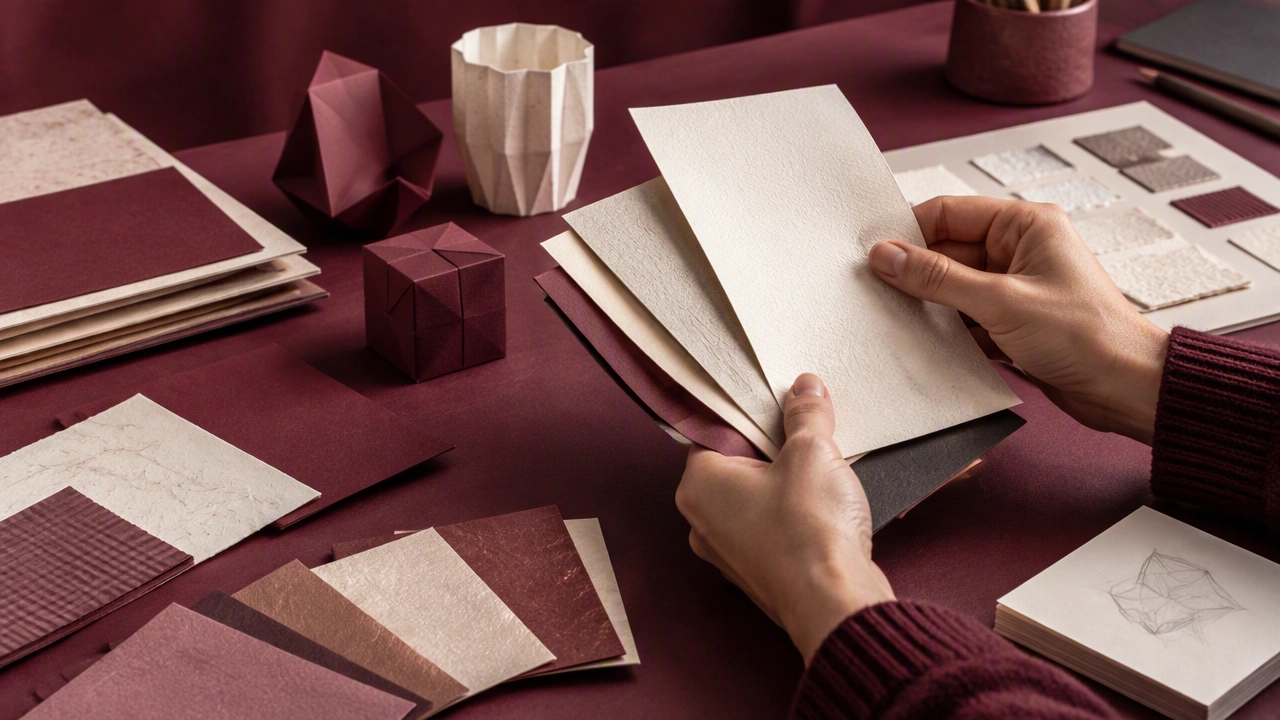
Choosing Paper for Handmade Prototypes: Weights, Textures, and Finishes
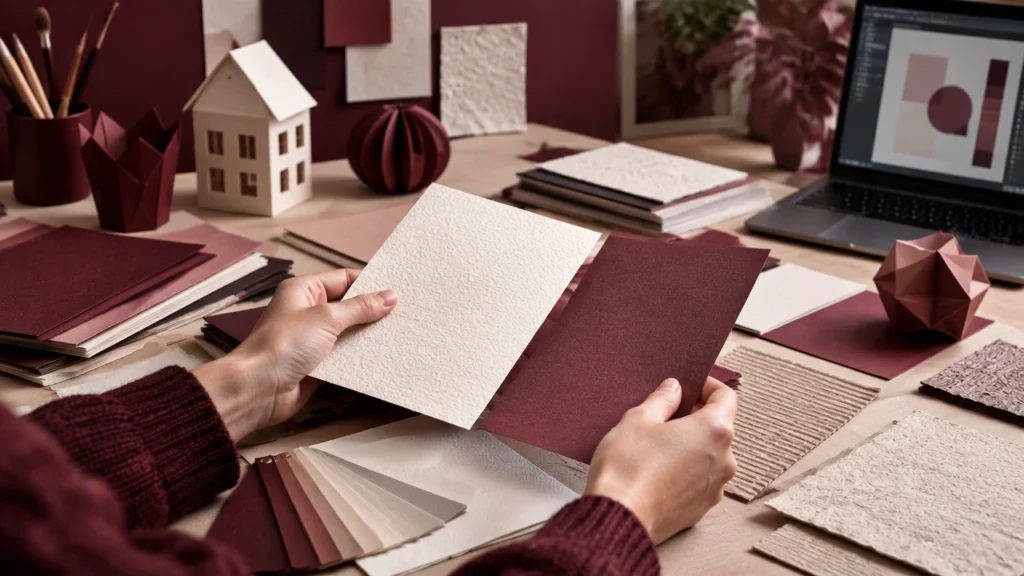
Good model-making starts before the first cut. Paper weight, texture, and finish determine whether a fold lands cleanly, an edge stays crisp, or a curved surface springs back. This guide compares practical options for the best paper types for handmade prototypes and paper models, with calm, specific recommendations for folding, cutting, scoring, and assembly.
Start with weight, measured for the job
Paper weight is usually expressed in grams per square meter (gsm). It describes the mass of a full sheet, not stiffness by itself, but it is a reliable starting point. Very light papers, roughly 60-90 gsm, feel soft and take folds easily. They suit study models, quick mock-ups, and layered surfaces where the structure comes from a frame or a thicker core.
Midweight papers, about 100-160 gsm, are the everyday range for prototypes. They accept scoring, hold a crease, and tolerate light glue without excessive cockling. This is a sensible zone for architectural massing models, packaging mock-ups, small products, and folded mechanisms.
Heavier stocks, 180-300 gsm and above, bring strength and presence. They resist bending, support their own span, and feel convincing when a design needs visual weight. The tradeoff is control: thick stock can crack along folds, show fuzzy edges, or resist tight radii. For those sheets, a well-placed score line matters more than force.
Match weight to scale and purpose
- Small, detailed parts: 100-160 gsm gives enough body to handle without distortion.
- Large, flat panels: 170-250 gsm reduces sagging and keeps silhouettes clean.
- Curved forms: 90-140 gsm bends smoothly; roll or curl the sheet before gluing to reduce spring-back.
- Structural ribs and tabs: 200-300 gsm adds strength where joints take the most stress.
Weight alone does not tell the whole story. Two sheets with the same gsm can behave differently because of fiber direction, formation, and coating. When possible, compare samples with a quick fold and a small test cut.
Texture changes how the paper cuts and folds
Texture affects both appearance and handling. Smooth papers have tight surfaces that take pencil, ink, and adhesive evenly. They are easy to score and usually produce sharp edges, which makes them a practical choice for precision parts and small tabs.
Textured papers add tactility and visual interest. Linen, felt, and subtly laid surfaces can soften light and make a model feel considered. They also change the work: blades may catch on raised fibers, scores can show irregular lines, and glue may sit differently across the surface. For textured stock, use a fresh blade, make lighter passes, and test the score on a scrap piece.
Surface feel and handling
- Smooth, matte: predictable folds, clean cuts, easy to mark up.
- Fine laid or linen: refined look with slightly more drag under the knife.
- Soft, felt-like: warm appearance, but edges can feather and creases can look relaxed.
- Coated or glossy: strong color and clean surfaces, with higher risk of visible fold marks and glue smudges.
If a prototype will be handled often, a lightly textured matte sheet can hide fingerprints better than a glossy one. For presentation models, choose texture deliberately: smooth stock emphasizes geometry, while textured stock emphasizes material and mood.
Finish decides how glue, ink, and light behave
Finish refers to the surface treatment applied during or after papermaking. Uncoated papers absorb moisture, which can cause slight expansion, cockling, or bleed when using wet media. They accept glue readily and are forgiving for layered construction, but they may need light pressing while drying.
Coated papers resist moisture and keep printed marks crisp. They can look polished and hold color well, yet coatings may crack along folds or repel adhesive. If you plan to use a coated sheet, test the glue on an offcut and consider a thin application with a brush or a fine-tip applicator.
Finish choices at a glance
- Uncoated: absorbent, easy to score, friendly to most adhesives.
- Satin or lightly coated: smoother color with moderate moisture resistance.
- Gloss or high coated: vivid surface, but fold lines and fingerprints show more easily.
- Vellum-like or translucent: useful for overlays and light studies; delicate under repeated folding.
Cutting and folding techniques that respect the sheet
Sharp tools make a measurable difference. Replace blades when cuts begin to drag, and support the paper on a clean mat to avoid dents. For straight edges, a metal ruler and a light first pass reduce wander. On thick stock, make several controlled passes rather than one heavy cut.
Scoring should be firm but restrained. A bone folder, a dried-out ballpoint, or a dedicated scoring tool can create a controlled groove without tearing the fibers. Test the pressure on a scrap piece: the goal is a visible channel, not a cut. Fold toward the score so the outer surface stays smooth.
A simple test before committing
Cut a small rectangle, fold it in both directions, apply a drop of glue, and let it dry fully. Check for cracking, curling, bleed, and edge fraying. This quick trial reveals more than a specification sheet and helps you choose confidently.
Practical combinations for common models
For packaging prototypes, start with 160-250 gsm uncoated stock for the main body and 100-140 gsm for interior dividers. For architectural massing, use 120-180 gsm for walls and 200-300 gsm for base plates and structural ribs. For small mechanical studies, choose 100-160 gsm smooth paper so tabs remain flexible and repeated motion does not split the fold.
Layering is often smarter than forcing one sheet to do every job. A light surface over a stiffer core gives clean color or texture without sacrificing strength. When joining pieces, keep glue thin, align edges before pressing, and allow full drying time before handling.
The best choice is the one that supports the idea without drawing attention to itself. Test weight, texture, and finish together, then repeat what works. With a few deliberate trials, paper becomes a predictable material for making things by hand and on screen.